
Find People in El Monte
An El Monte people search should start with the strongest official path, not with a broad web search. Los Angeles County keeps most high-value identity and address records at the county level, while the City of El Monte keeps city-created records, staff contacts, police report procedures, permit history request routes, and local clerk files. California agencies add voter rules, business entities, professional licenses, prisons, vital records, and archives.
Choose the starting point from the known fact. A current or old address points to the Assessor Portal and then to recorder records. A court matter points to Los Angeles Superior Court. A business name points to SOS bizfile, fictitious business name filings, DCA licenses, or city business channels. A family-history question may need vital records, probate, obituaries, LAPL directories, and the State Archives.
El Monte also has a local routing problem that can change the search path. The city is in the San Gabriel Valley near many compact city boundaries, and an El Monte mailing address may not always mean the City of El Monte holds the record. Use parcel, city, community, and ZIP layers when an address is close to South El Monte or an unincorporated county area. That check can prevent a misdirected request.
Names can repeat often in a dense city, so pair each name with a second fact when possible. A middle initial, former street, school, parcel AIN, business trade name, license board, filing date, or relative's probate case can separate one person from another. El Monte research also benefits from language and surname flexibility. The research file notes Latino, Asian, Japanese agricultural, and Dust Bowl-era migration layers, so records may use compound surnames, married names, birth surnames, transliterations, or changed spellings across decades.
- Start with the known fact: name, address, business, school, license, case, or family event.
- Pick the custodian that owns that record: city, county, court, state, library, or archive.
- Use the online portal first when the research confirms one exists.
- Switch to the counter, request form, mail route, or archives when the record is offline or restricted.
- Confirm important facts with the custodian before relying on a record.
El Monte People Search Offices
El Monte records are strongest when the right office is used. The Los Angeles County Registrar-Recorder/County Clerk holds recorded documents, marriage and county clerk functions, fictitious business names, voter-related request channels, and many vital-record copy paths. The Assessor supplies parcel and assessment data. Los Angeles Superior Court holds court cases. The City Clerk handles local records, public notices, council files, forms, and public-records requests.
The deeper records-system treatment, including fees and request steps, is on the El Monte public records page.
El Monte Address Search
Property is one of the most useful El Monte people search routes because it can connect a person, address, parcel identifier, assessment record, mailing-address clue, and recorded-document chain. The Assessor Portal searches by AIN or address and shows parcel and geography context. AIN means Assessor Identification Number, the county's parcel key.
The recorder side is different. Los Angeles County maintains real-estate records since 1851, but it does not publish an official internet index for those records. The research file notes that the office cites Government Code section 6254.21 address-posting concerns. That creates a two-step path: use the assessor to identify the parcel, then use RR/CC in-person indexes by name and year when the deed chain matters.
Older property work can need even more care. RR/CC says records from 1851 through 1957 are reviewed in the lower level at Norwalk Headquarters, while records from 1958 to present are reviewed on the second floor. That floor split matters when tracing a family property, an heir issue, or a long-ago owner. A searcher with only a street address may need the assessor AIN first, then a year range for the name index.
| Starting fact | First search | Next official step |
|---|---|---|
| Current El Monte address | Assessor Portal by address | Use AIN and legal description for recorded documents |
| Owner name | RR/CC name and year index | Review grantor-grantee records at Norwalk |
| Old address | LAPL street directories | Compare occupants with deeds, probate, and census records |
El Monte Court Name Search
El Monte court records route through Los Angeles Superior Court. The criminal defendant-name search helps locate criminal case numbers by name. Results show case number, defendant name, filing date, and filing location. The service is updated daily, but it excludes traffic and other infractions. Felony coverage begins in 1980, while misdemeanor coverage begins in 1988 with some earlier automated misdemeanor data.
| Field label | Type | Required | Notes |
|---|---|---|---|
| Defendant Last Name | Text | Yes | Search by defendant name |
| Defendant First Name | Text | Likely yes or optional by form | Static source describes defendant-name submission |
| Middle Name / Initial | Text | Optional | Not fully confirmed in static source |
| Login / guest mode | Account or payment choice | Yes for fee workflow | Fee depends on registered or guest use |
The court source is captured here: Los Angeles Superior Court criminal defendant-name search.
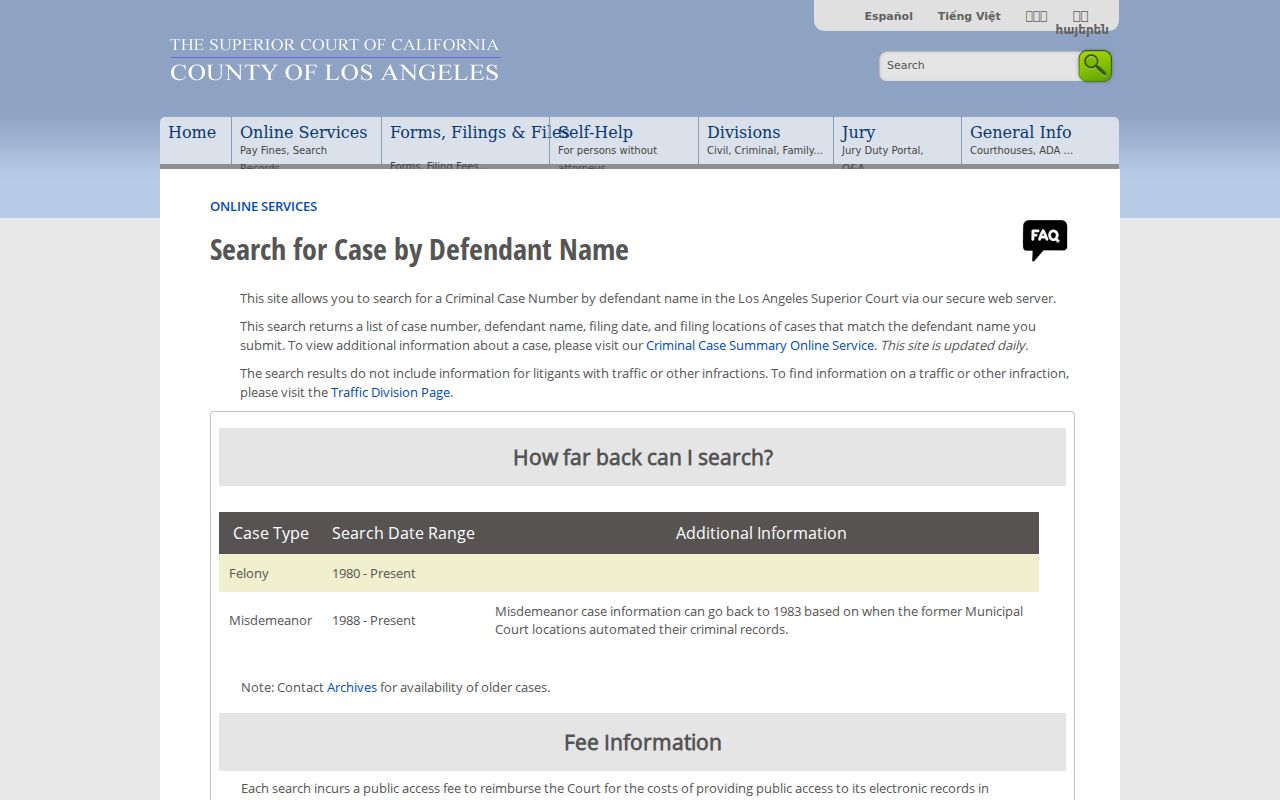
Court records can support a name search, but sealed, juvenile, adoption, and some family details may not be visible online.
El Monte Vital Records
Vital records can help an El Monte people search when the goal is family history, death confirmation, marriage context, or proof of a relationship. Los Angeles County RR/CC issues certified copies for county birth, death, and marriage events, while Los Angeles County Public Health handles recent local registrar functions and CDPH maintains statewide records. Divorce files and decrees route to Los Angeles Superior Court, while CDPH can issue dissolution certificates.
California Health and Safety Code section 103526 separates authorized certified copies from informational certified copies for birth, death, and nonconfidential marriage records. Confidential marriage records are more restricted. For genealogy, older indexes, LAPL vital-record guides, FamilySearch collections, and court probate can be more useful than a certified-copy order.
El Monte Voter Search Limits
Voter records are important but tightly controlled. California My Voter Status is a self-lookup tool, and Los Angeles County has voter registration information request routes with fees and mail requirements. The full voter file is available only for defined election, scholarly, journalistic, political, governmental, record-review, and authorized vendor purposes.
Elections Code section 2194 and California regulations protect home address, telephone, email, unique voter identifiers, signatures, and protected voter data. That means voter registration is not a general public address finder. Current voter records belong in a lawful voter-record request, while historical voter research can use Great Registers and archives. The full voter-record treatment is on the El Monte voter registration records page.
Use limit. Do not use voter information, court records, property records, or directory data to harass, threaten, or target a person.
El Monte Custody Lookups
El Monte has its own Police Department, but county jail custody is searched through the Los Angeles County Sheriff's Department. Police Records handles crime reports, traffic collision reports, vehicle storage reports, arrest reports, and citations. The research file lists Police Records at 626-580-2115, with report requests handled through the Police Lobby and some records delayed or confidential.
The LASD source image comes from the official Los Angeles County Sheriff's Department Inmate Locator.
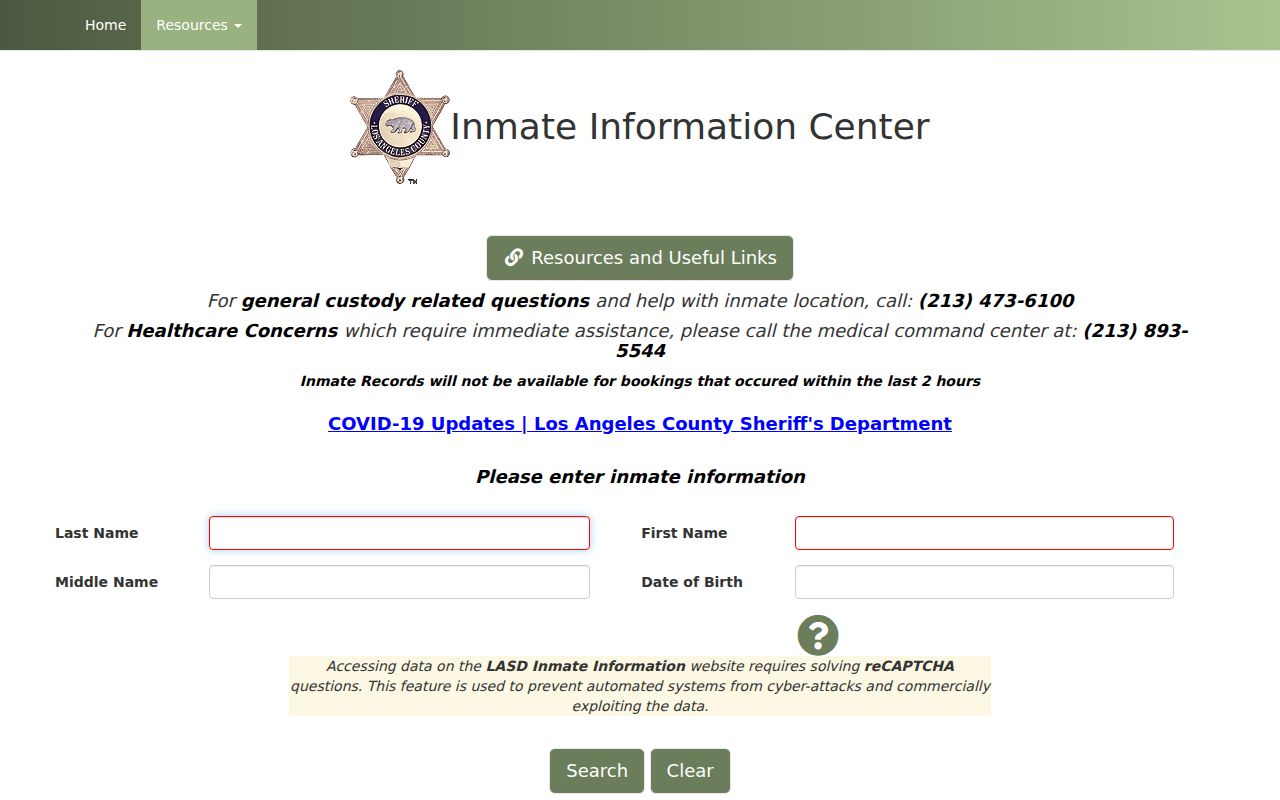
Use county jail lookup for current county custody, not for city police reports or full criminal-history research.
State custody is a separate system. The official CDCR CIRIS source is captured here.
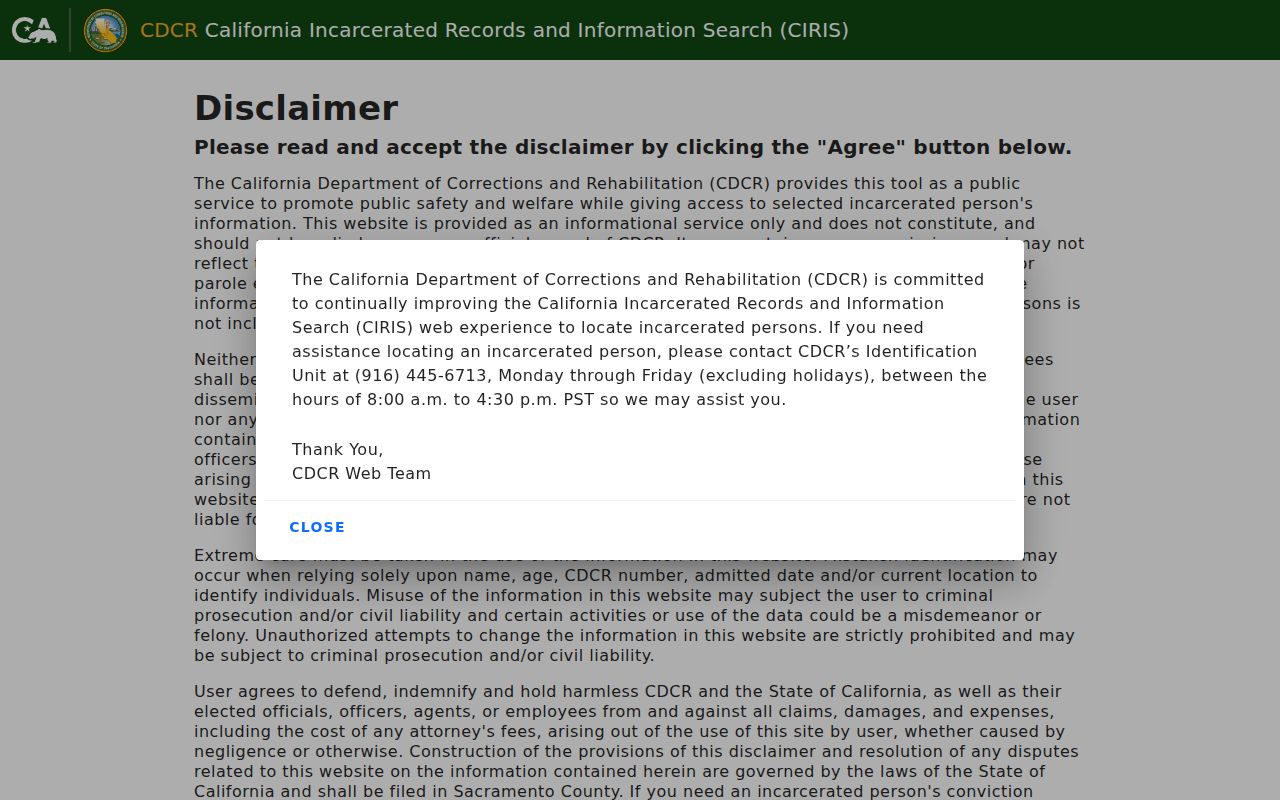
CDCR records are state prison custody records, while federal custody uses federal systems that were not the main El Monte source set.
El Monte People Directories
People directories in El Monte include the city staff directory, school district staff directories, CDE school details, the Assessor Portal, the RR/CC grantor-grantee index, SOS business search, DCA License Search, chamber listings, LAPL city and street directories, and local museum resources. Each directory answers a narrow question. Staff directories identify public roles. Property and recorder records tie names to places or filings. Historical directories connect older names and addresses.
The directory landscape is broad enough to need its own treatment. The El Monte people directories page separates current government, school, business, professional, property, and historical directory sources.
El Monte License Trails
Business and professional records can identify people through entity filings, agents, licenses, discipline status, and business addresses. California SOS bizfile searches corporations, LLCs, and limited partnerships. Los Angeles County RR/CC handles fictitious business names. DCA License Search covers many occupational licenses and shows whether a license is current, expired, or has discipline such as suspension or revocation.
El Monte city business channels include Business License, Business Occupancy Permit, Planning counter, and Community and Economic Development. The research file did not locate a public city business-license register, so local business records may require the counter, city contact, or records request. The El Monte/South El Monte Chamber of Commerce adds a member directory, but it is not the same as an official license record.
Building and occupancy records are also address-based rather than name-first. El Monte Building and Safety handles plan review, permits, inspections, and the real property inspection process, but the research did not find a public permit-history search portal. The city waitlist page says building permit history requests should go through the City Clerk public-records process. For a person search, that means the practical sequence is address, department, request date range, and then any names that appear in the responsive permit or business file.
Historical El Monte Search
Historical people search in El Monte benefits from LAPL's Los Angeles-area city and street-address directories, local-history resources, the El Monte Historical Museum, FamilySearch, the California State Archives, and National Archives naturalization material. LAPL's digitized city and street directories span 1875-1987 and can be searched by name or address. That is a strong source for old occupants and businesses.
El Monte incorporated in 1912 and predates the modern city government. Older records may use township, rancho, mission, county, or Los Angeles-area descriptions. The city's history includes the Old Spanish Trail and Santa Fe Trail corridor, agricultural communities, walnut growers, Japanese farm families, Latino farmworkers, Dust Bowl-era residents, and later Asian migration. Name variants matter.
The El Monte Historical Museum adds another local source when a person search is really a community-history search. The research file notes collections tied to early residents, walnut growers, Gay's Lion Farm, photographs, artifacts, and guided local-history context. It is not a public name database, but it can point family-history research toward the names, neighborhoods, and institutions that older official records may use.
- Grantor and grantee
- The seller or transferor and the buyer or receiver in recorded property documents.
- Situs address
- The physical location of a property, which can differ from the owner's mailing address.
- Great Register
- A historical voter register useful for residence and genealogy research.
Official El Monte Records
Commercial people-finder services may combine public records, marketing data, phone and address sources, and online traces. They can be quick, but results may be stale, merged, or unsourced. Official records are slower and more fragmented, yet they identify the custodian, the access rule, and the record that can be checked.
| Source type | Strength | Weakness |
|---|---|---|
| Official custodian | Traceable to the office that keeps the record | May require fees, request forms, or in-person work |
| Library or archive | Strong for older names, addresses, and family history | Coverage can depend on year and collection |
| Commercial compiled data | Fast broad search | May be stale, merged, incomplete, or hard to verify |
El Monte Records Dead Ends
Some El Monte people search paths stop because the record is restricted, not because the person cannot be found. Adoption records, juvenile records, sealed cases, protected voter records, confidential marriages, driver and vehicle data, social security numbers, voter signatures, and some police reports are closed or limited by law. Other paths stop because the record is offline, such as Los Angeles County's real-estate index or El Monte building permit history.
When a source ends, use the next lawful route. A blocked voter lookup may still leave historical Great Registers. A missing online deed index may still allow Norwalk index review. A thin current directory may be supplemented by school, chamber, license, business, court, probate, obituary, or library records. Note: Treat absence from one portal as a routing problem, not as proof about a person.
Recent records work also needs source checks. The research file notes that Los Angeles County's recorder online-access gap remained current in 2026, that California CPRA timing still uses the ten-day determination rule with a possible fourteen-day extension, and that CDPH vital-record forms and fee pages were updated in 2026. For important records, verify the live office page before paying a fee or mailing an application.